02 / THE CALYX
Hibiscus / tart, vivid, made for gathering
Dried hibiscus flowers become jewel-colored drinks whose names, spices and serving rituals change from place to place.
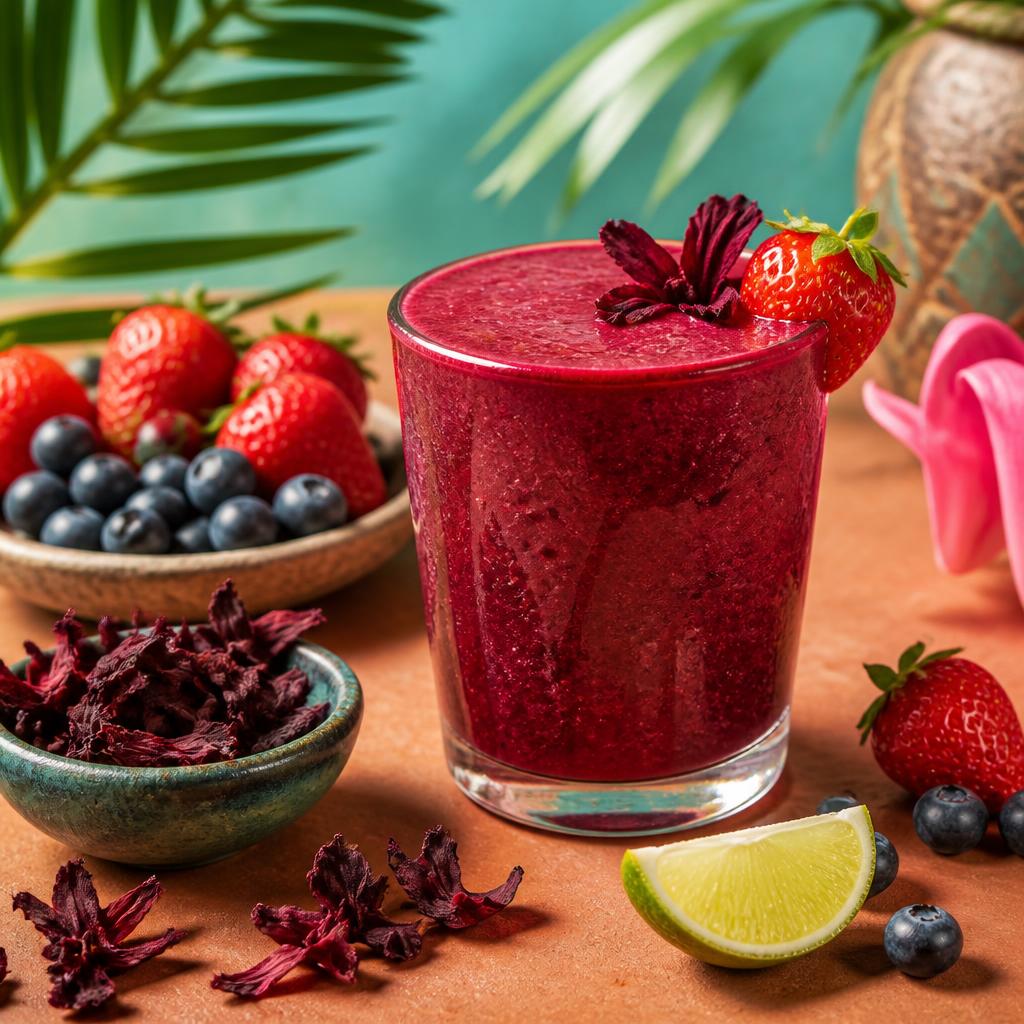
Hibiscus drinks are a good reminder that the same ingredient can travel while keeping its local meaning. Bissap, sorrel and agua de jamaica are not one interchangeable recipe; each belongs to a food culture with its own proportions, occasions and preferred aromatics.
Traditions and preparations
Bissap
Senegal and West Africa
Bissap, made from dried hibiscus calyces, is a beloved West African drink with regional and family variations.
The calyces are steeped in hot water, then the deep red liquid is cooled and sweetened. Mint, ginger, pineapple or orange blossom may be added depending on the cook and occasion.
Sorrel
Jamaica and the Caribbean
Caribbean sorrel is especially associated with Christmas and other gatherings, where the drink is made in batches to share.
Dried hibiscus is infused with ginger and warming spices such as clove or cinnamon, then sweetened and chilled. The steeping time and spice balance differ across families and islands.
Agua de jamaica
Mexico
Agua de jamaica is one of Mexico’s well-known aguas frescas: a tart, refreshing drink served at homes, fondas and celebrations.
Hibiscus is simmered or steeped, strained and diluted with water. Sugar is common, but the drink’s bright acidity also makes it a natural partner for citrus and savory food.
GoodSoul-inspired connections
GoodSoul-inspired connection: our Hibiscus Berry Smoothie starts with cooled hibiscus tea and berries. It is explicitly a modern adaptation, not a smoothie version of bissap, sorrel or agua de jamaica.
References for this story
These references helped us check the broad culinary context. They are starting points, not a claim to represent every household, region or community.
- A hibiscus drink that, by any of its names, is sweet — The Washington Post
- Hibiscus & Ginger Sweet Tea — Smithsonian National Museum of African American History and Culture
- The Oxford Companion to Food — Oxford University Press