NATURAL REMEDIES / 08 / 3 items
3 Food-First Ways to Support Heart Wellness
Three dependable pantry foods that bring soluble fiber, plant omega-3 fats and savory depth to heart-supportive meals.
Heart-friendly eating is built from repeatable choices: oats and flax for fiber, garlic for flavor, plus the rest of the meal and the life around it.
Where this comes from
Oats, flax and garlic are humble pantry foods with long culinary histories across northern Europe, the Mediterranean and many contemporary kitchens. Their value is cumulative: fiber, plant omega-3 ALA, sulfur compounds and satisfying flavor can help a nourishing pattern feel doable.
What the research suggests
Oat beta-glucan has established evidence for supporting healthy LDL cholesterol. Ground flax adds fiber, lignans and ALA, while garlic’s organosulfur compounds have shown modest effects on some cholesterol and blood-pressure markers in clinical research.
Explore the ingredients
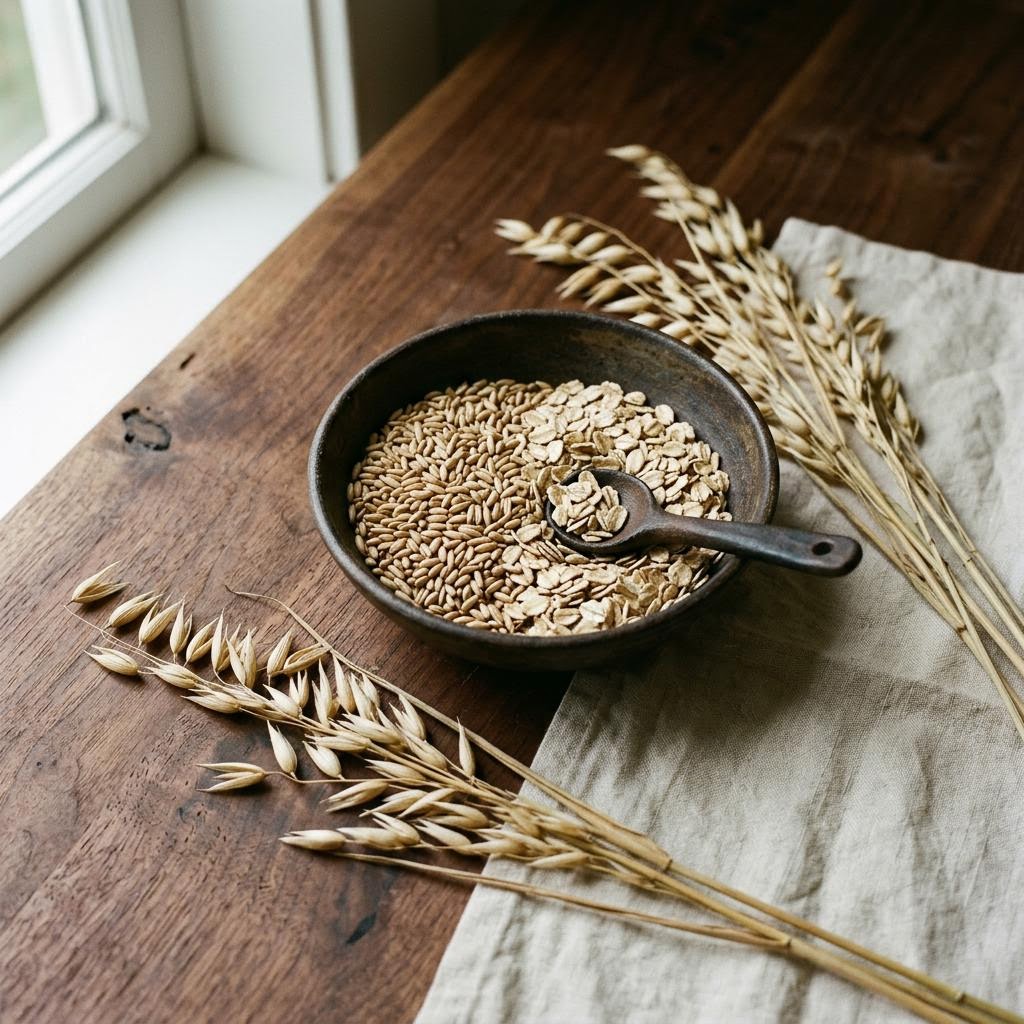
Oats †
Avena sativa
What it may bring: Oat beta-glucan forms a viscous fiber that slows digestion and helps carry bile acids from the body. Regular intake has established evidence for supporting healthy LDL-cholesterol patterns and contributes to digestive regularity.
Traditional context: Oats have been a staple grain in northern European food traditions and remain a practical base for breakfast, baking and everyday nourishment.
Try it: Try porridge, overnight oats, oat-based baking or a blended breakfast. Increase fiber gradually and drink enough fluid.
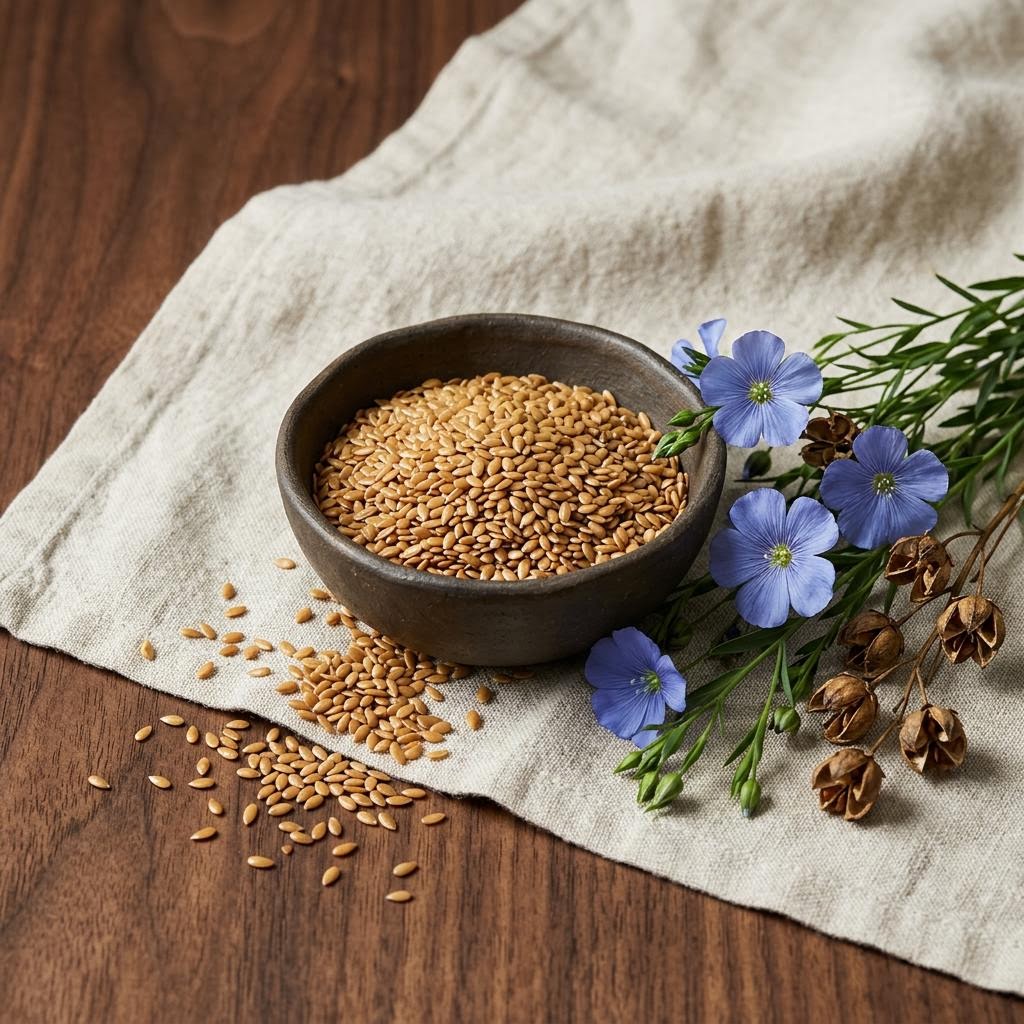
Flaxseed †
Linum usitatissimum
What it may bring: Ground flax supplies soluble and insoluble fiber, lignans and the plant omega-3 fat ALA. Research suggests regular intake can support bowel regularity and modestly improve some cholesterol and blood-pressure markers.
Traditional context: Flax has been grown for fiber, oil and food across Europe, Asia and the Mediterranean, with ground seed becoming a familiar pantry ingredient.
Try it: Use freshly ground seed in oats, yogurt, smoothies or baking, with water alongside it. Whole seeds often pass through undigested.
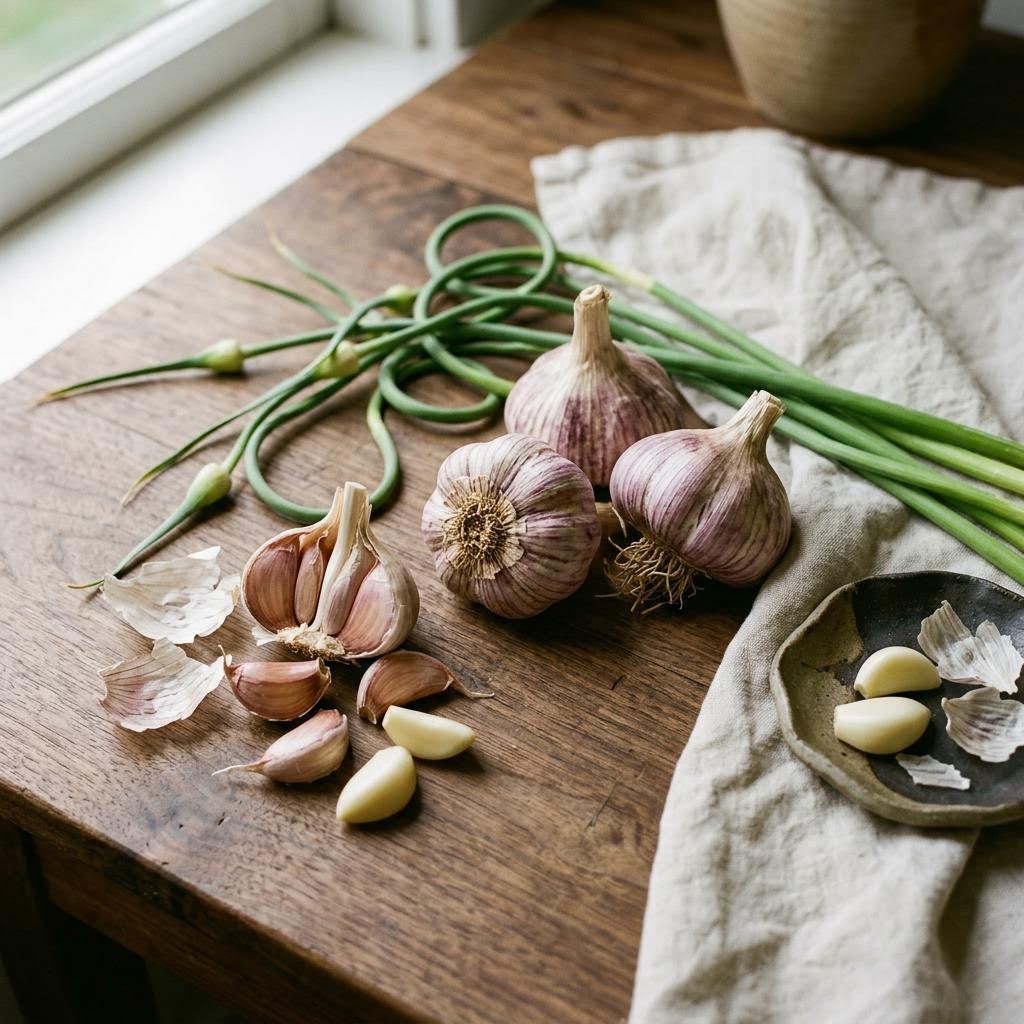
Garlic †
Allium sativum
What it may bring: Cut or crushed garlic forms organosulfur compounds, including allicin-related compounds. Studies of garlic preparations suggest modest effects on some blood-pressure and cholesterol markers, while ordinary garlic also brings depth to vegetable-rich meals.
Traditional context: Garlic is both a food and a household ingredient in cuisines across the Mediterranean, Asia, Africa and the Americas, where it has also carried long-standing traditional wellness uses.
Try it: Add fresh garlic to beans, soups, sauces and roasted vegetables. Food amounts are gentler and less concentrated than capsules or aged-garlic extracts.
Safety & considerations
People with heart disease, chest pain, a bleeding disorder or heart and blood-pressure medicines should check with a qualified clinician before concentrated supplements.
† Small note markers beside ingredient names link to the specific considerations collected below.
- Oats. Choose certified gluten-free oats for diagnosed celiac disease. Fiber can affect absorption of some medicines, so separate high-fiber meals from medicines when a pharmacist recommends it.
- Flaxseed. Increase slowly to avoid bloating. Flax may affect blood sugar, blood pressure and absorption of oral medicines; avoid raw or unripe seed and ask a clinician about high-dose use in pregnancy.
- Garlic. Large supplemental doses may increase bleeding risk and can interact with anticoagulants, antiplatelet medicines and some HIV medicines. Stop concentrated supplements before surgery only with clinician guidance.
Sources reviewed
- DASH Eating Plan — National Heart, Lung, and Blood Institute
- Flaxseed and Flaxseed Oil — National Center for Complementary and Integrative Health
- Garlic — National Center for Complementary and Integrative Health
- Omega-3 Fatty Acids: Fact Sheet for Consumers — NIH Office of Dietary Supplements
Natural Remedies is for general education only. Food and traditional plant use do not diagnose, cure or replace medical care. If you have a diagnosed condition, are pregnant or breastfeeding, or take prescription medicines, speak with a qualified clinician or pharmacist before using concentrated herbal products.