05 / THE RHIZOME
Turmeric / color, earth, and ceremony
Turmeric brings color and earthy bitterness to spice pastes, pickles, warm drinks and everyday cooking across Asia and beyond.
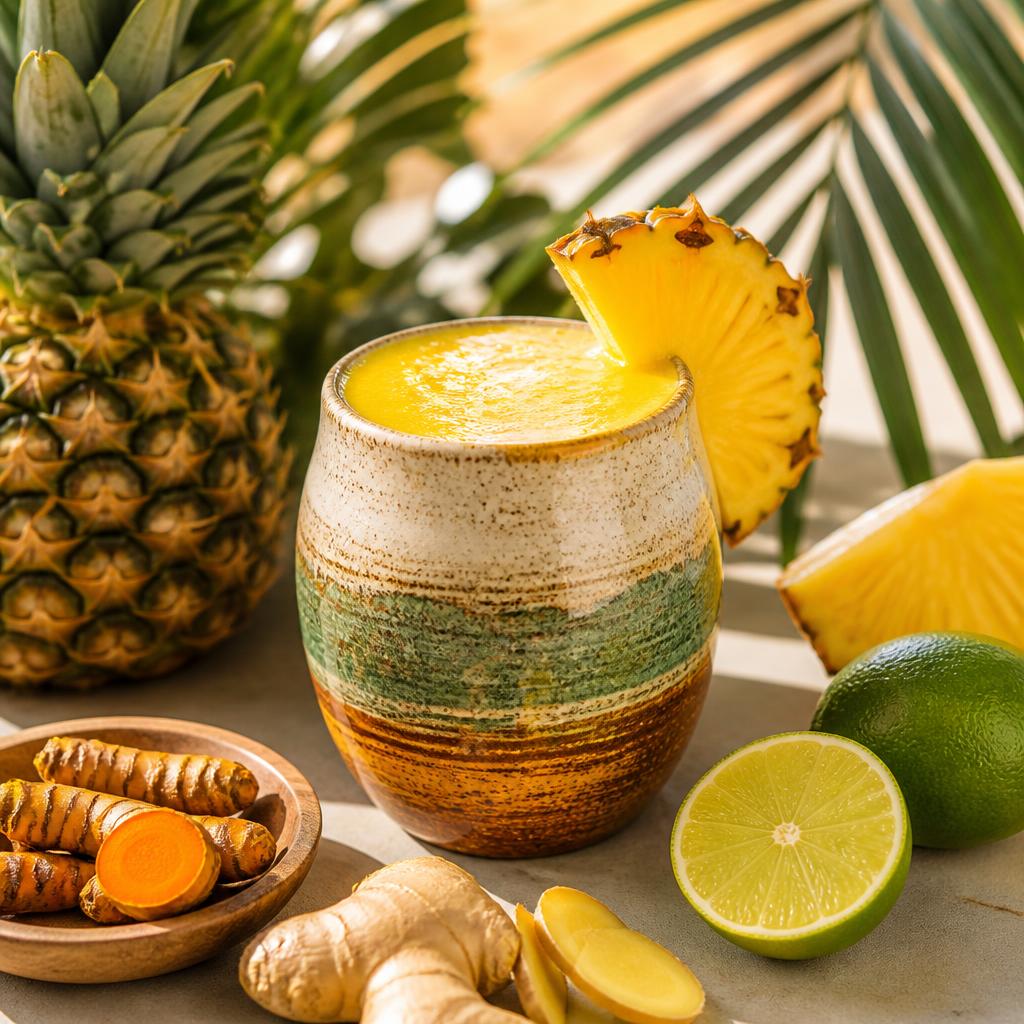
Turmeric’s bright color can make it look like a symbol first and an ingredient second. In practice, it is used in ordinary, specific ways: grated into a paste, bloomed with oil, steeped with sour fruit or added to a family pickle. The traditions below are culinary contexts, not promises of a health outcome.
Traditions and preparations
Haldi doodh and everyday masala
India
Turmeric is a foundational spice in many South Asian kitchens, where it colors dals, vegetables, rice dishes, pickles and spice mixtures.
Haldi doodh, often called turmeric milk in English, is a warm milk drink seasoned with turmeric and family-specific additions such as cardamom, pepper or ginger. In savory cooking, turmeric is usually added in small amounts to a spiced oil or masala.
Jamu kunyit asam
Indonesia
Jamu is a broad Indonesian tradition of herbal drinks with many regional and household recipes. Kunyit asam pairs turmeric with tamarind and sweetener.
Fresh turmeric is blended or pounded, simmered with water and combined with tamarind and palm sugar. It is strained and served warm or chilled, depending on preference.
Turmeric in mohinga and pickles
Myanmar
Turmeric is part of the aromatic foundation in Burmese cooking, including fish noodle soup and preserved vegetable preparations.
In mohinga, turmeric joins lemongrass, onion and other aromatics in a broth whose exact ingredients vary by cook. It also seasons pickled vegetables, where its color becomes part of the dish’s character.
GoodSoul-inspired connections
GoodSoul-inspired connection: our Turmeric Pineapple Smoothie and Turmeric Chickpea Couscous use turmeric as a culinary spice. They are adapted recipes, not medicinal preparations.
References for this story
These references helped us check the broad culinary context. They are starting points, not a claim to represent every household, region or community.
- Turmeric — National Center for Biotechnology Information Bookshelf / National Library of Medicine
- Jamu wellness culture — UNESCO Intangible Cultural Heritage
- Turmeric: Post-harvest Operations — Food and Agriculture Organization of the United Nations