NATURAL REMEDIES / 14 / 3 items
3 Foods for Hydration & Electrolyte Support
Water-rich foods and a little electrolyte context for ordinary hydration breaks.
Hydration can be practical and pleasurable: water alongside crisp fruit, cucumber or a splash of coconut water. These three foods add fluid and electrolytes for ordinary days.
Where this comes from
Coconut water, watermelon and cucumber each have warm-climate food histories, where water-rich produce helps make hot days more comfortable. They contribute fluid in different ways, while coconut water also brings potassium and a naturally mild sweetness.
What the research suggests
Coconut water contributes potassium with fluid, cucumber adds crisp water-rich volume, and watermelon brings water, potassium, lycopene and citrulline. Together they make ordinary hydration more appealing, especially when eaten or drunk alongside regular water.
Explore the ingredients
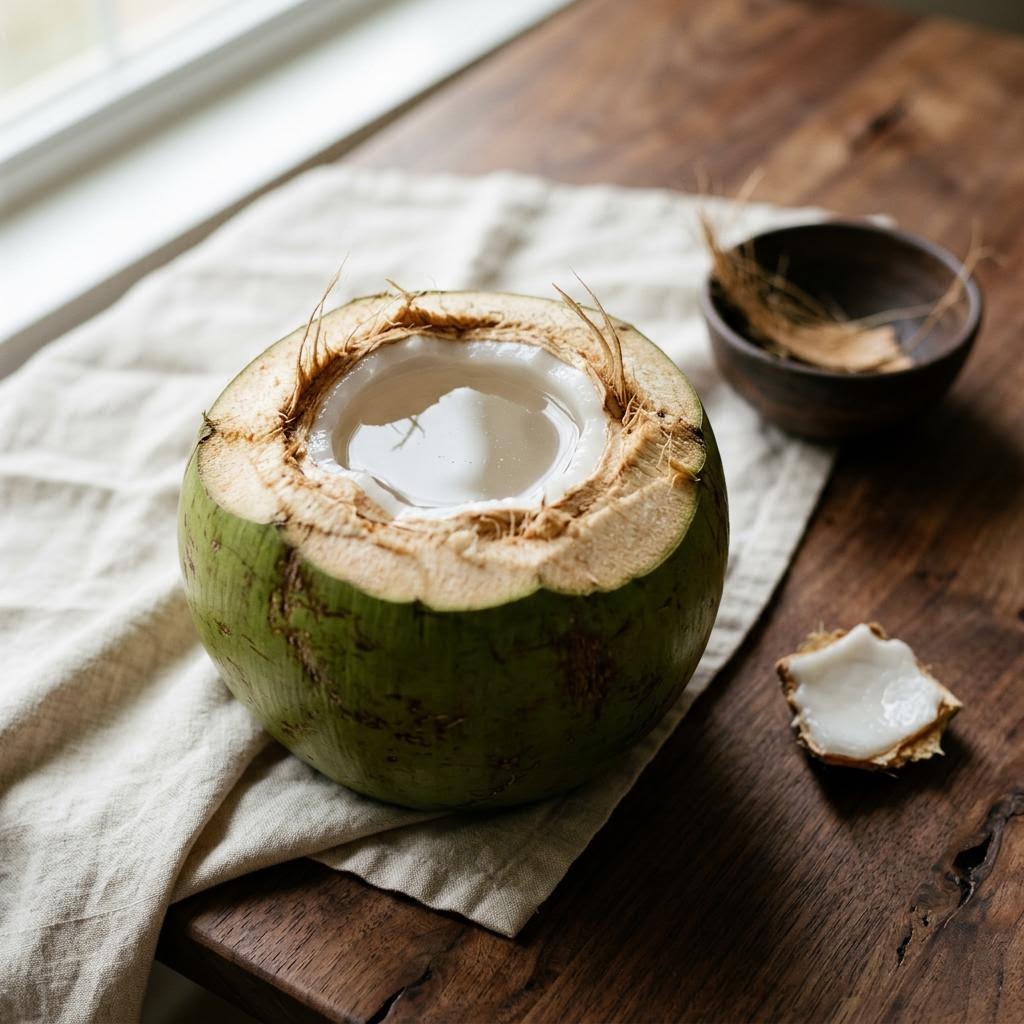
Coconut Water †
Cocos nucifera
What it may bring: Coconut water supplies fluid, potassium and small amounts of other electrolytes. It can support ordinary hydration after light activity, while its electrolyte profile is less complete and less standardized than oral rehydration solutions.
Traditional context: Young coconut water is enjoyed fresh in tropical foodways, served chilled or paired with fruit and other simple ingredients.
Try it: Choose an unsweetened carton or fresh coconut water and drink it alongside meals or ordinary water. Check the label for added sugar and potassium.

Watermelon †
Citrullus lanatus
What it may bring: Watermelon is mostly water and also provides lycopene, potassium and the amino acid citrulline. Research on citrulline-rich watermelon and blood flow is emerging; its clearest everyday benefit is appealing hydration as whole fruit.
Traditional context: Watermelon is served fresh, juiced and shared in warm-weather food traditions across Africa, the Middle East, Asia and the Americas.
Try it: Eat chilled wedges or blend them with lime and mint. Whole fruit is more filling than strained juice and keeps the fiber in the glass.

Cucumber †
Cucumis sativus
What it may bring: Cucumber contributes water, a small amount of potassium and fiber when the peel is kept. Its crisp volume makes it an easy way to add water-rich produce to meals and snacks.
Traditional context: Cucumber is eaten fresh, pickled and folded into cooling dishes across South Asian, Mediterranean, Middle Eastern and many other kitchens.
Try it: Slice it into salads, blend it with fruit, or pair it with yogurt and herbs. Keep the peel when it is well washed and a little extra texture works.
Safety & considerations
People with kidney disease, heart failure, diabetes, fluid restrictions or potassium concerns should ask a clinician which drinks and portions are appropriate. Seek care for severe dehydration, confusion or inability to keep fluids down.
† Small note markers beside ingredient names link to the specific considerations collected below.
- Coconut Water. People with kidney disease, heart failure, potassium restrictions or medicines that affect potassium should ask a clinician before drinking it regularly. It does not replace urgent rehydration care.
- Watermelon. Fruit still contributes carbohydrate, which matters for people managing blood sugar. Anyone with a fluid or potassium restriction should follow individualized medical advice.
- Cucumber. Wash produce carefully and use caution with spoiled or improperly refrigerated cut fruit and vegetables. Fluid restrictions still apply even when water comes from food.
Sources reviewed
- FoodData Central — U.S. Department of Agriculture
- Dietary Guidelines for Americans, 2020–2025 — USDA and HHS
Natural Remedies is for general education only. Food and traditional plant use do not diagnose, cure or replace medical care. If you have a diagnosed condition, are pregnant or breastfeeding, or take prescription medicines, speak with a qualified clinician or pharmacist before using concentrated herbal products.