Smoothies / 10 min
Tamarind pineapple smoothie
Tart tamarind, pineapple, lime and ginger make a bright Nigerian-inspired smoothie with a lively finish.
- Prep
- 10 min
- Total
- 10 min
- Serves
- 2 glasses
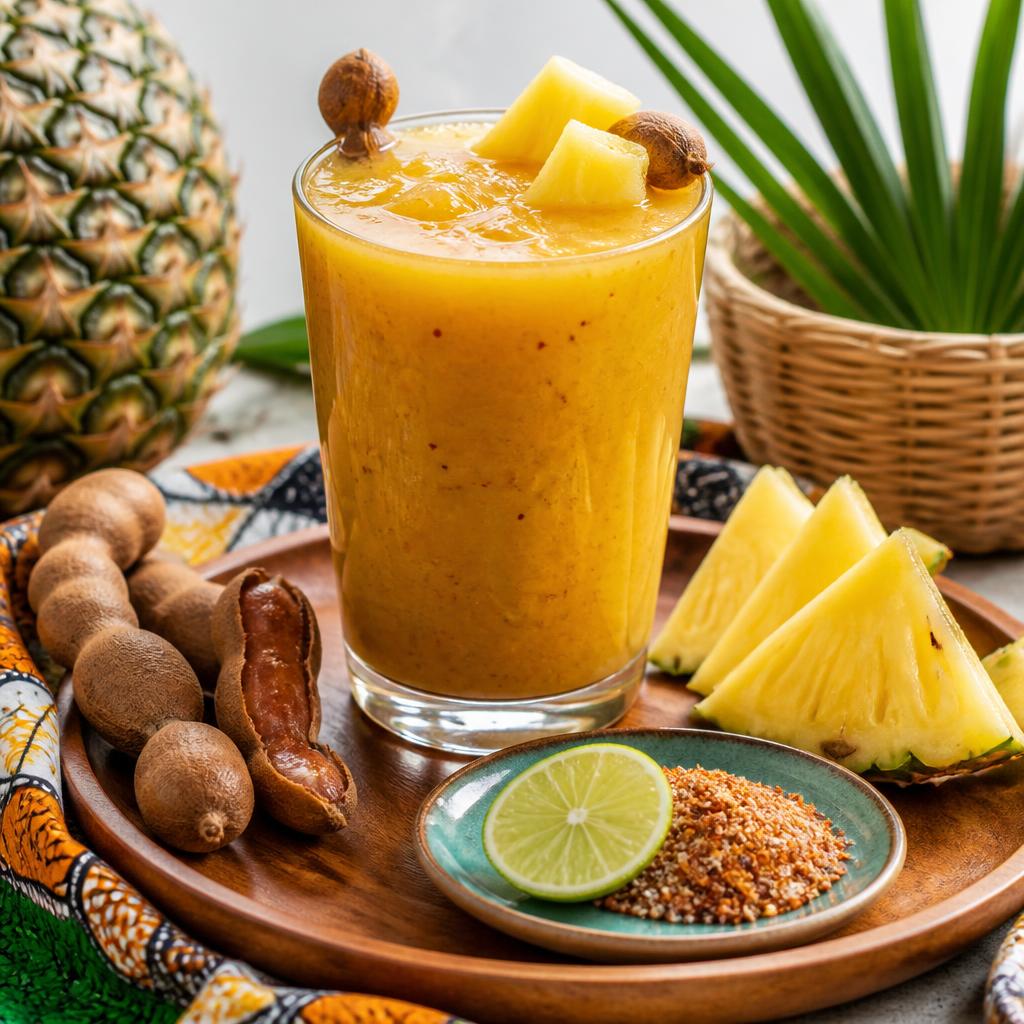
Tamarind brings a deep sweet-sour note to juicy pineapple. This is a cold, quick blend inspired by the way tart tropical ingredients bring contrast to drinks across West African kitchens.
Ingredients
- 1 cup frozen pineapple chunks
- ½ cup tamarind pulp or unsweetened tamarind concentrate
- ¾ cup coconut water
- 1 teaspoon grated fresh ginger
- Juice of ½ lime
- ½ cup ice
- 1 pinch chili salt, optional
Method
- 1. If using block tamarind pulp, loosen it with two tablespoons warm water and strain out fibers and seeds.
- 2. Add the tamarind, pineapple, coconut water, ginger, lime juice and ice to a blender.
- 3. Blend until smooth. Taste and add a tiny pinch of chili salt if you like a savory edge.
Estimated nutrition
- calories
- 135 calories
- fat
- 1 g fat
- carbohydrate
- 33 g carbohydrates
- protein
- 2 g protein
- fiber
- 3 g fiber
Approximate values per serving. Nutrition varies with ingredients, brands and portion sizes.
Substitutions
- Use mango in place of half the pineapple for a rounder flavor.
- Plain water can replace coconut water.
- Leave out chili salt for a gentler version.
Good to know
Tamarind varies widely in intensity. Blend half the amount first, then add more until the sweet-sour balance feels right.
Cultural context
Nigeria / Tart fruit drinks
Tamarind and pineapple show up in many global foodways, including West African kitchens and Nigerian-inspired drink combinations. This recipe names its inspiration while leaving room for the many ways people make and enjoy them.
Traditional use: Tamarind pulp is used in drinks, sauces and cooking across regions, bringing a distinctive sourness that balances fruit and spice.
What research suggests: Tamarind contains organic acids and fiber, but concentrated pulp can be quite tart and is best considered one ingredient in a varied diet.
Safety note: Use culinary tamarind and rinse fresh produce. Tamarind may interact with some medicines; ask a pharmacist or clinician if that is relevant to you.
Questions, answered.
What kind of tamarind should I buy?
Choose food-grade tamarind pulp or an unsweetened concentrate. Sweetened tamarind sauce will make the smoothie much sweeter.
Why does tamarind need straining?
Block tamarind pulp often contains fibers and seeds. Straining makes the finished drink smoother.