On the evening / January 9, 2026
An evening wind-down that fits real life
A realistic evening wind-down can be a short sequence of closing tasks, softer cues and flexible rest that fits around real life.
Close one small loop
Evening routines are often written as if the day ends on schedule. In real homes, there may be dishes, a late shift, children who need help, a second wind or one last message that genuinely matters. A wind-down is not a performance of having no responsibilities; it is a few signals that the pace can change.
Begin with a closing loop. Write tomorrow’s first task, put one essential object by the door and make a short decision about food or clothing. Two minutes of preparation can keep practical thoughts from following you into every quieter moment, while leaving the rest for morning.
Soften the cues
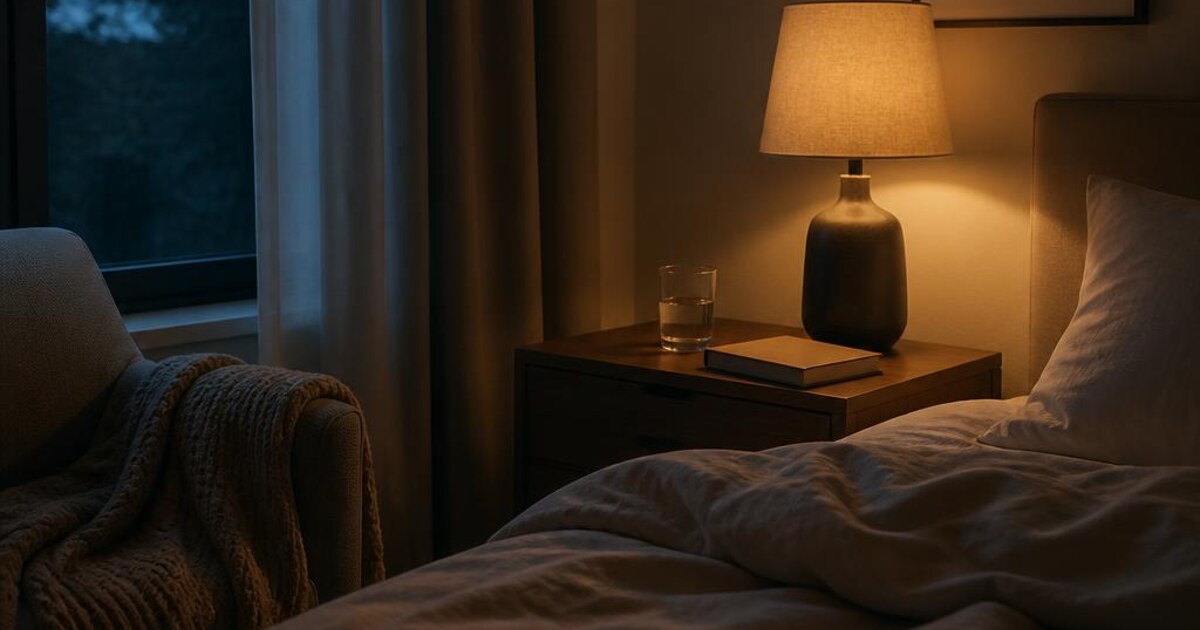
Lower the volume of the room gradually. Dim a lamp, switch from a work playlist to something familiar, or move the phone to a surface that is not your bed. The change is useful even when screens remain part of your evening; perfection is not the entry fee.
Choose one body cue that feels pleasant: a warm wash, comfortable clothes, a few gentle stretches or a cup of tea. Chamomile, mint and other herbal products can affect people differently and may interact with medicines, so ordinary food-and-drink amounts are not automatically appropriate for everyone.
Pick low-demand rest
Let the final activity be genuinely low demand. Read a few pages, listen to a quiet record, fold laundry slowly or talk with someone without multitasking. If sleep does not arrive, avoid turning the routine into a test; persistent sleep difficulty is worth discussing with a qualified professional.
A wind-down can be fifteen minutes or three. Keep a tiny version for late nights and a longer version for evenings with more room. The point is not to reproduce someone else’s checklist but to make the transition recognizable to you.
Allow imperfect evenings
Try the sequence for a week, then remove anything that feels like homework. The best evening ritual leaves some space for being a person, including the nights when it does not happen at all.
Ways to try this
- Write tomorrow’s first task on paper before you leave your work area.
- Create a three-minute version: dim one light, put the phone down and choose comfortable clothes.
- Keep a book, puzzle or headphones where your evening naturally slows down.
- Use a familiar audio cue to mark the shift from work or chores to rest.
- Treat tea as a soothing ritual rather than a guaranteed sleep aid, and check safety when using herbs or medicines.
- Make room for the late-night version of your life; a short wind-down is still a wind-down.