On reading labels / September 12, 2026
Salt vs. Sodium: What’s Actually the Difference?
Salt and sodium often appear as if they are interchangeable. They are connected, but knowing the difference makes a Nutrition Facts label much easier to read.
The short version
- Salt is a compound made from sodium and chloride; sodium is a mineral that the body uses in small amounts.
- Nutrition Facts labels generally list sodium in milligrams, not the total amount of salt.
- Packaged foods can contribute sodium even when they do not taste especially salty.
- The goal is not zero sodium; it is a food pattern that fits your health, preferences and clinical guidance.
Two related words
Table salt is sodium chloride. Sodium is one part of that compound, and chloride is the other. In everyday conversation, people often call both “salt,” but a label’s sodium number is the more precise piece of information.
Sodium is an essential nutrient. Nerves use it to send signals, muscles use it to contract and body fluids use it to maintain balance. The body needs some; more is not automatically better.
What the label tells you
The sodium line on a Nutrition Facts label tells you how much sodium is in one serving. Check the serving size first, then compare products in the same category. A large container may hold several servings even when it looks like one convenient portion.
Bread, cheese, sauces, soups, canned foods and ready-to-eat meals can all add sodium. Taste is an unreliable measuring tool because sweetness, acidity, spice and texture can mask it.
Make it useful in the kitchen
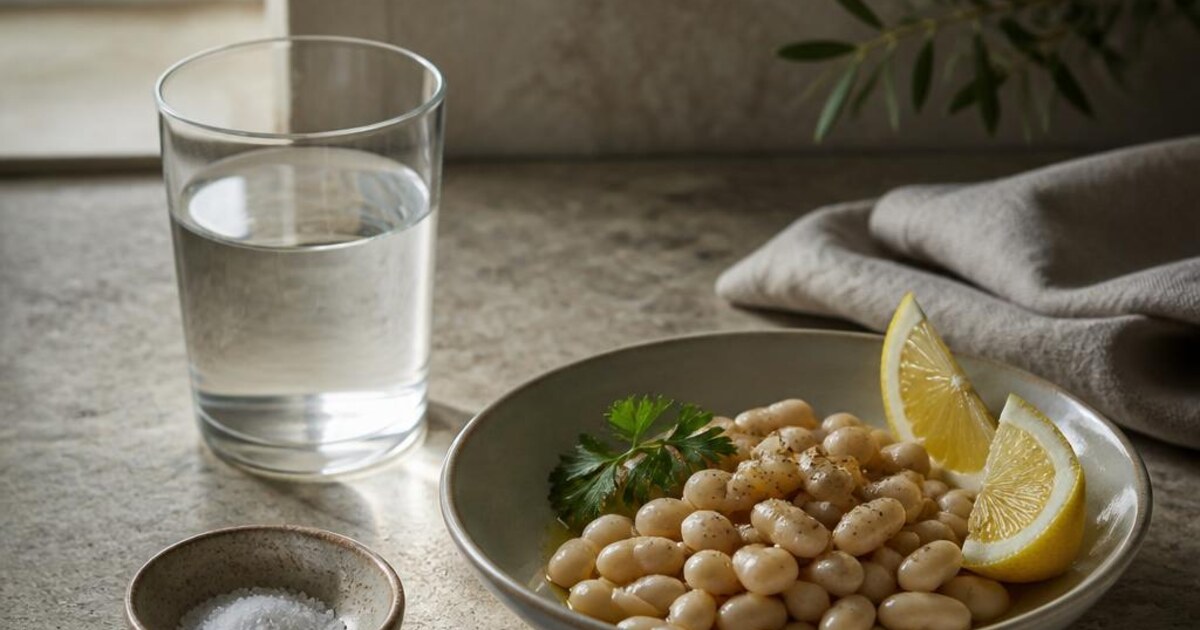
Use the label as a comparison tool, not a reason to fear one ingredient. Choose lower-sodium versions when they taste good to you, rinse canned beans when practical, and build flavor with citrus, herbs, spices, garlic or toasted ingredients.
A low-sodium choice still needs to be enjoyable enough to repeat. If you have been given an individual sodium target for blood pressure, kidney disease or another condition, use that guidance rather than a generic internet rule.
Ways to try this
- Compare two similar packaged foods by sodium per serving and by serving size.
- Taste a soup or sauce after adding acid, herbs and aromatics before adding more salt.
- Keep unsalted beans, grains and frozen vegetables available so the meal has a low-sodium foundation.
- Use the percentage Daily Value as a quick comparison, not as a diagnosis.