On useful meals / February 6, 2026
How to build a balanced bowl without overthinking it
Build a balanced bowl with a base, protein, colorful produce, satisfying fat and a flavorful finish using ingredients you already have.
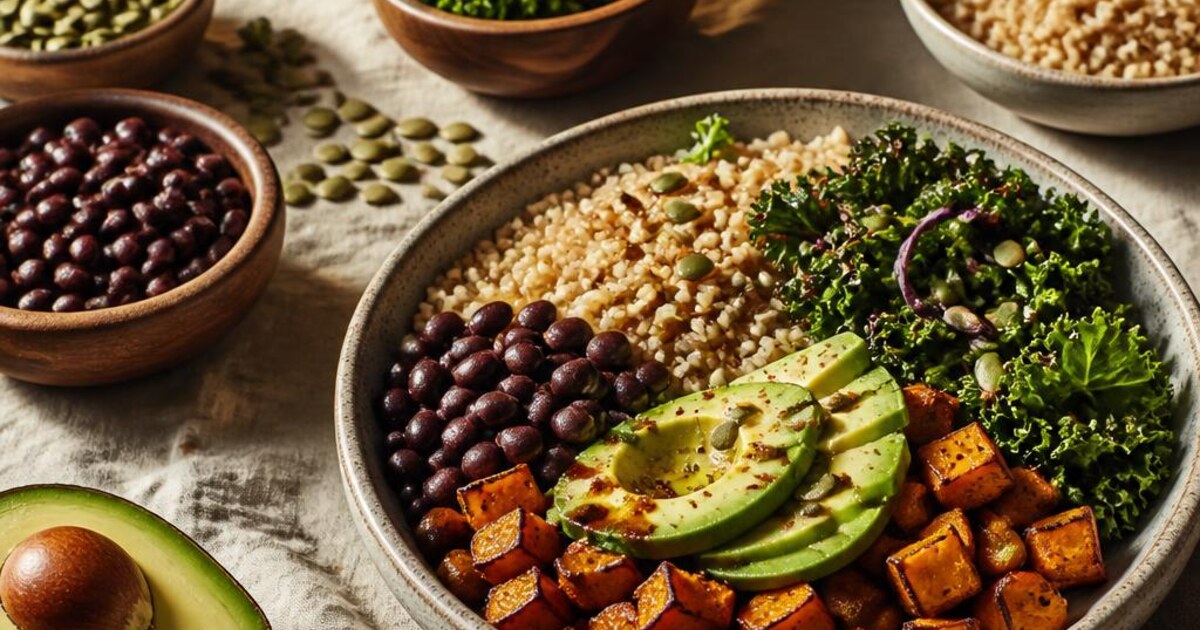
Give the bowl a base
A bowl is less a recipe than a way to assemble dinner. It can hold leftovers, a few raw vegetables and a sauce you made five minutes ago. The useful question is not whether every bowl looks complete, but whether it has enough contrast to be satisfying: something substantial, something fresh, something savory and something you want to keep eating.
Start with a base that gives the meal shape. Rice, barley, farro, couscous, noodles, potatoes or a slice of sturdy bread can all work. Leftover grains are especially useful; warm them with a splash of water or broth so they feel newly made.
Choose an anchor
Add a protein anchor that suits the kitchen and the meal. Beans, lentils, tofu, eggs, yogurt, fish, chicken, nuts and seeds all have different textures and preparation needs. A mixed bowl does not need a large amount of every component, just one element that makes it more sustaining for you.
Aim for color and texture rather than a rigid vegetable quota. Use roasted carrots, cucumber, greens, cabbage, tomatoes, frozen peas or fruit. Raw and cooked produce can share a bowl, and frozen vegetables are a practical ingredient, not a compromise.
Build flavor in layers
Finish with a little richness and a strong flavor note. Tahini, olive oil, avocado, cheese, seeds or yogurt can bring softness; lemon, vinegar, herbs, spices, chili or pickles can wake the bowl up. Add the sharp ingredients gradually and taste as you go.
Keep food needs personal. Allergies, medical conditions, culture, budget and appetite all shape what a balanced meal means. Swap ingredients freely, check labels and use professional guidance for medically prescribed eating patterns rather than treating a formula as universal.
Plan for the next bowl
The easiest bowl is the one designed for tomorrow. Cook an extra grain, wash a handful of greens or stir together a sauce while dinner is already underway. Store components separately when you can so textures stay distinct.
Ways to try this
- Use the simple order: base, anchor, produce, richness, bright finish.
- Start with leftovers before buying a special ingredient for a bowl.
- Keep one jarred sauce, one frozen vegetable and one quick-cooking grain on hand.
- Add crunchy toppings at the table so they stay crisp.
- Taste before salting; pickles, cheese, broth and sauces may already bring plenty of seasoning.
- Make a smaller bowl first and add more of any component if you are still hungry.