On the whole food / September 8, 2026
Fruit Has Sugar. Why Isn’t It the Same as Candy?
Fruit contains natural sugars, but “contains sugar” does not describe the whole food. The useful difference is the company the sugar keeps.
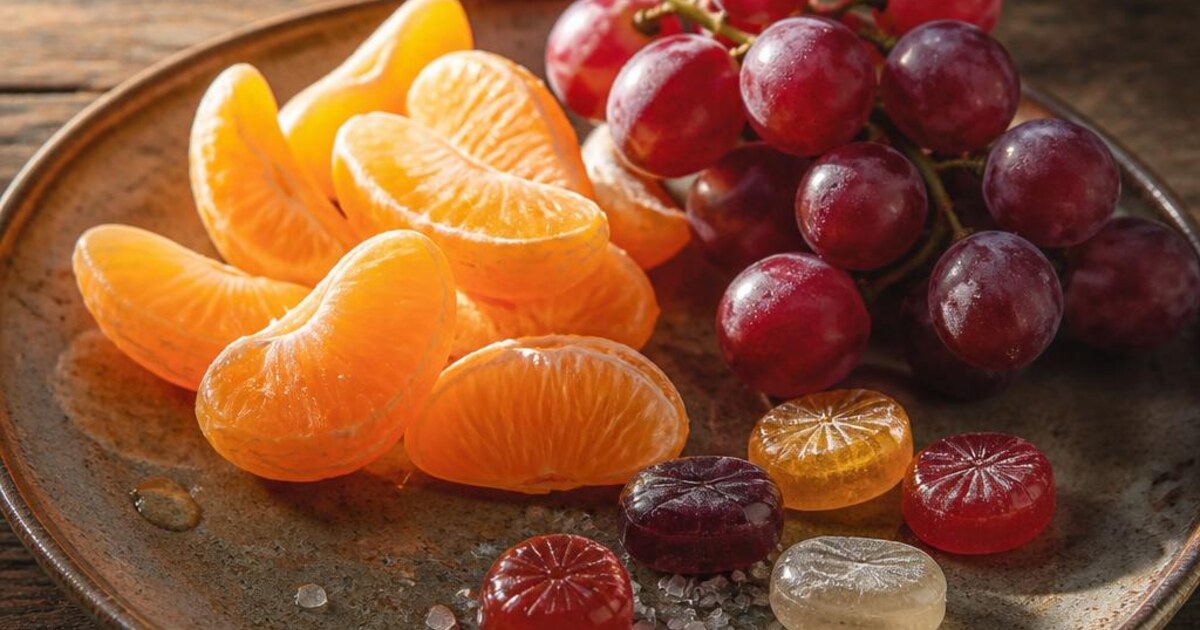
The short version
- Whole fruit contains naturally occurring sugars along with fiber, water, vitamins and plant compounds.
- Candy is usually more concentrated in added sugar and has less of the intact structure found in whole fruit.
- Dried fruit and juice are not identical to whole fruit because processing changes volume and concentration.
- The practical question is how a food fits the whole eating pattern, not whether it passes a purity test.
Sugar is one part of fruit
An apple is not a bag of sugar with an apple-shaped label. It is a whole food with water, fiber, texture and a range of nutrients. Those features affect how quickly it is eaten, how filling it feels and how much sugar arrives in one ordinary serving.
Fruit sugars are naturally present in the plant. Added sugars are put into foods during preparation or manufacturing. Both are carbohydrates, but the food around them changes the eating experience and the nutritional context.
Structure changes the experience
Chewing whole fruit takes time, and its water and fiber add volume. Juice removes much of the structure and makes several pieces of fruit easy to drink quickly. Dried fruit keeps useful nutrients but becomes smaller and more concentrated, so portions can shift without feeling large.
Candy is designed to be sweet and easy to eat, often with added sugar and little water or fiber. That does not make it forbidden. It simply means candy and fruit play different roles in an everyday eating pattern.
Use the comparison, not the fear
Whole fruit can fit breakfast, snacks, desserts and savory meals. Add berries to yogurt, citrus to a salad, or sliced pear to toast. If juice or dried fruit is what you have, enjoy it with awareness of the smaller volume and more concentrated sweetness.
People with diabetes, dental concerns or a medically prescribed eating pattern may need individual guidance. A simple comparison can support a choice; it cannot replace care tailored to a person.
Ways to try this
- Keep washed fruit visible so the whole food is as convenient as a packaged sweet.
- Pair fruit with yogurt, nuts, seeds or a meal when you want more staying power.
- Pour juice into a small glass and treat it as a drink, not a replacement for all the fruit in the day.
- Use dried fruit as an ingredient or accent when a smaller amount gives enough sweetness.