On minerals / September 4, 2026
Potassium: The Mineral That Helps Balance Sodium
Potassium helps cells, nerves and muscles work and supports fluid balance. Find it beyond bananas, with a kidney-health boundary.
The short version
- Potassium is an electrolyte involved in nerve signals, muscle contraction and fluid balance.
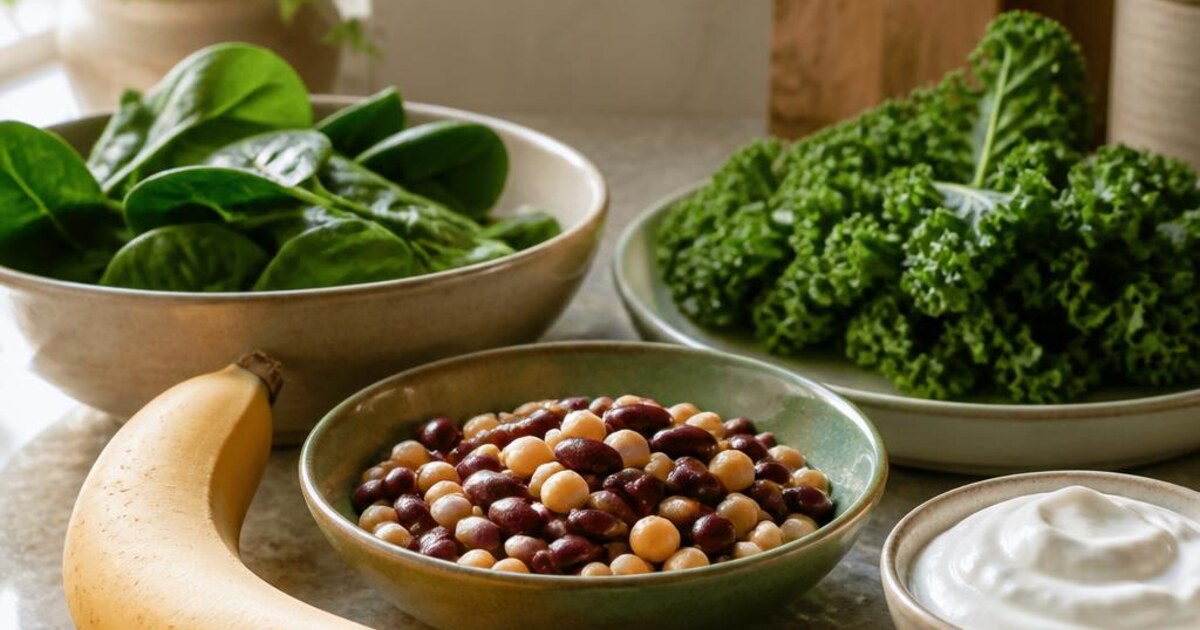
- Beans, lentils, potatoes, leafy greens, yogurt, fruit and fish can all contribute potassium.
- Potassium and sodium work in related fluid-balance systems, but one does not simply cancel out the other.
- Kidney disease and some medicines can make high potassium dangerous, so supplements are not a casual upgrade.
More than a banana
Potassium is found across ordinary foods: potatoes, beans, lentils, leafy greens, yogurt, oranges, melon, tomatoes and fish are examples. The best source is the one that fits your meals, budget, culture and tolerance.
Because it is an electrolyte, potassium helps maintain electrical gradients that nerves and muscles use. It also participates in fluid balance inside and outside cells.
How sodium fits
Sodium is more concentrated outside cells and potassium is more concentrated inside them. The relationship helps cells communicate and supports fluid regulation. Eating more potassium does not make a high-sodium pattern disappear, and reducing sodium does not mean every person should take a potassium supplement.
Food patterns rich in vegetables, beans, fruit and other minimally processed foods often bring potassium along with fiber and other nutrients. That is a pattern, not a prescription to force one mineral.
Know the boundary
Healthy kidneys remove excess potassium through urine. Kidney disease, certain blood-pressure medicines and some other conditions can change that process. “Electrolyte” products and salt substitutes can contain concentrated potassium, so check labels and ask a clinician or pharmacist when relevant.
If you have been told to limit or increase potassium, follow the plan made for you. Sudden weakness, palpitations or other concerning symptoms need prompt medical attention rather than a nutrition experiment.
Ways to try this
- Add beans, lentils, greens or potatoes to meals before reaching for a supplement.
- Use a label to compare potassium and sodium in packaged foods when that information is available.
- Ask before using potassium-based salt substitutes if you have kidney or heart concerns.
- Build variety rather than trying to identify one “best” potassium food.